
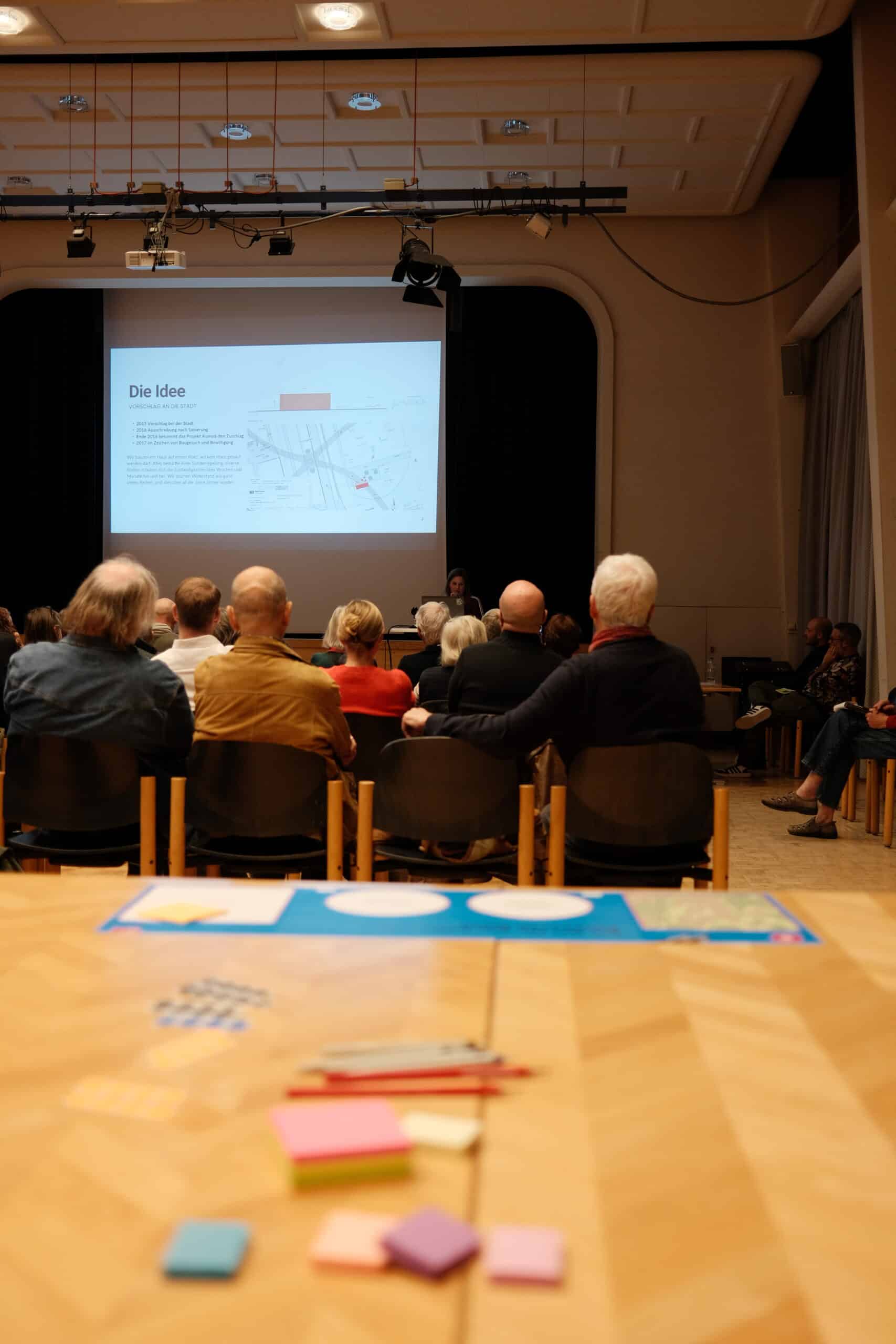
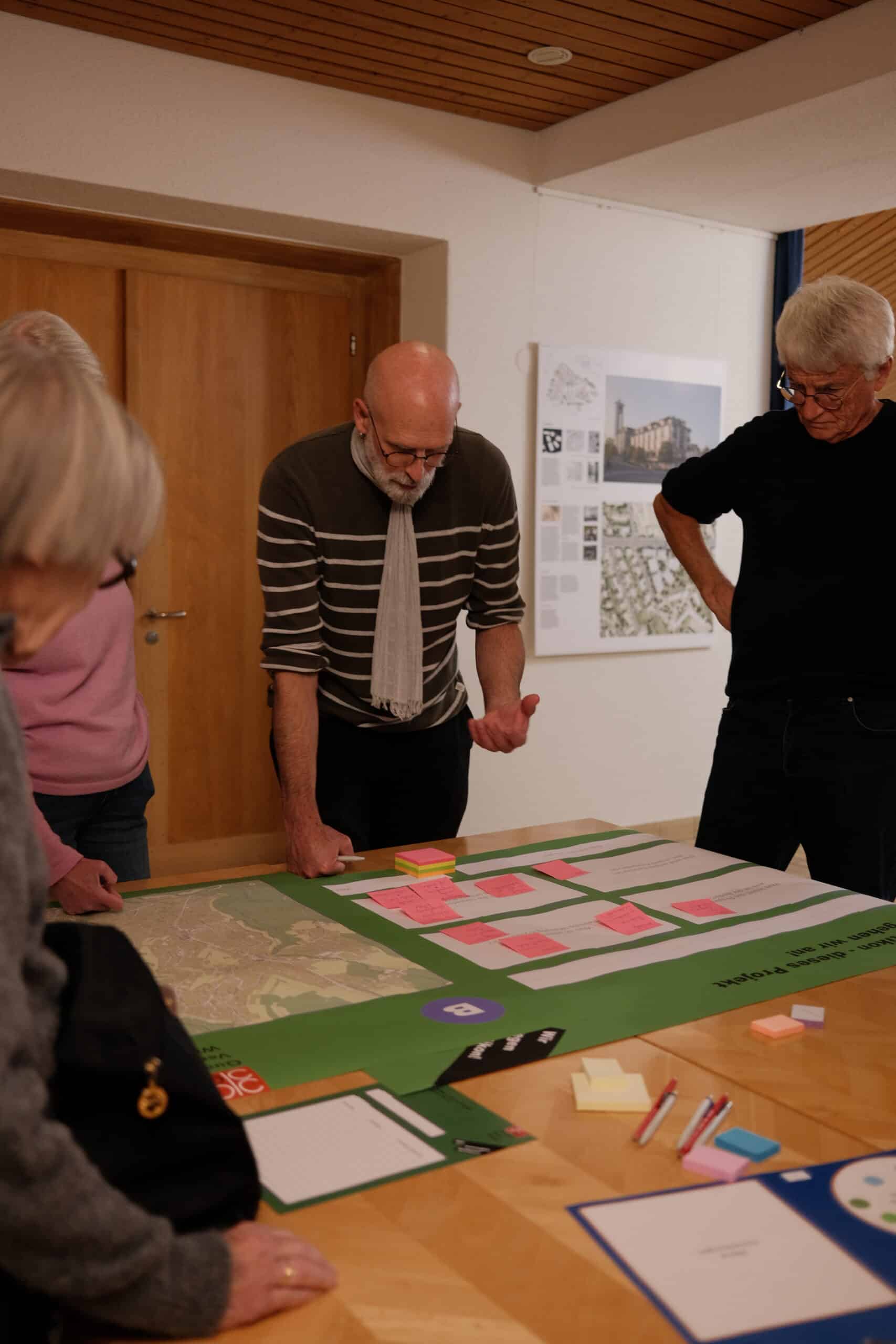
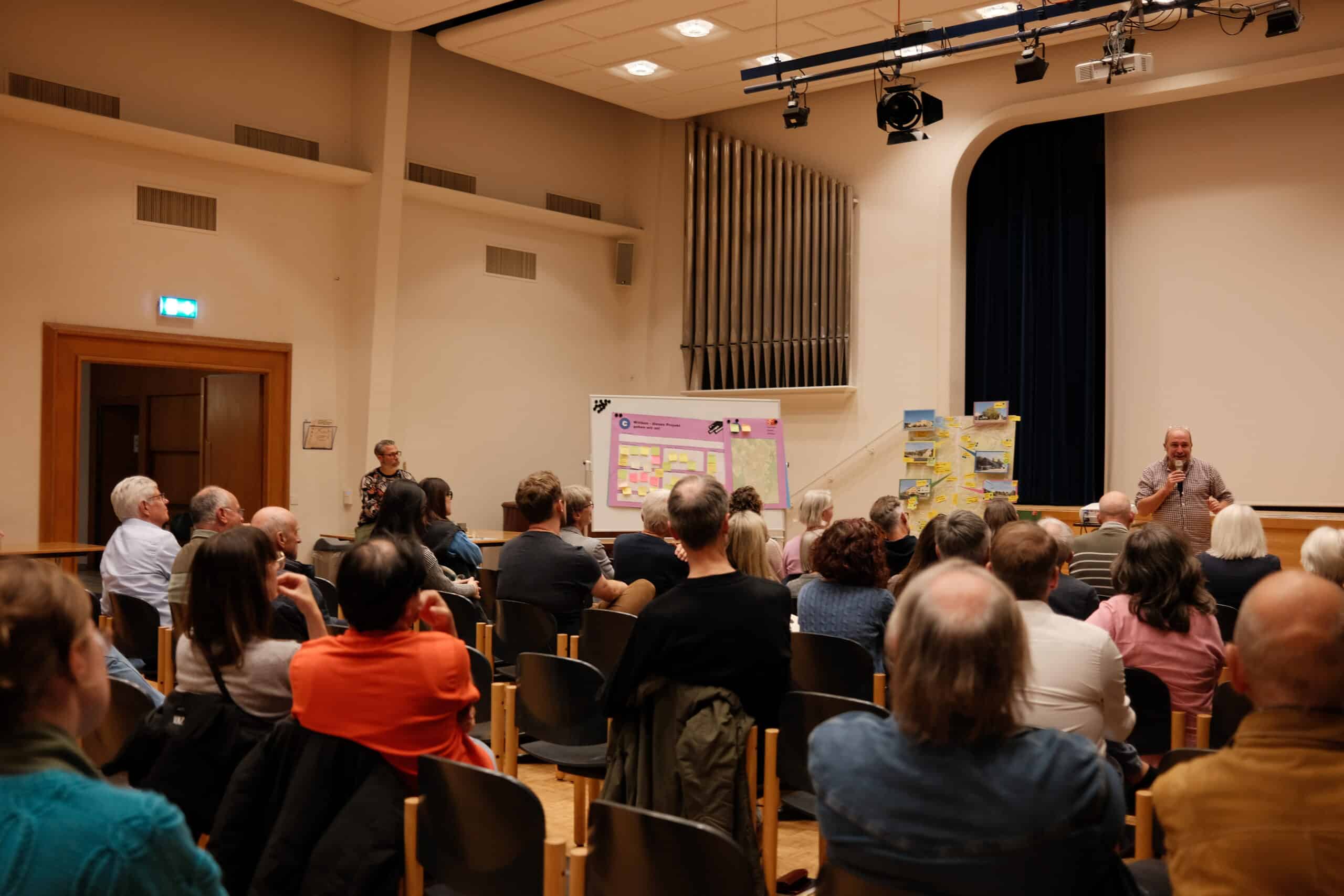
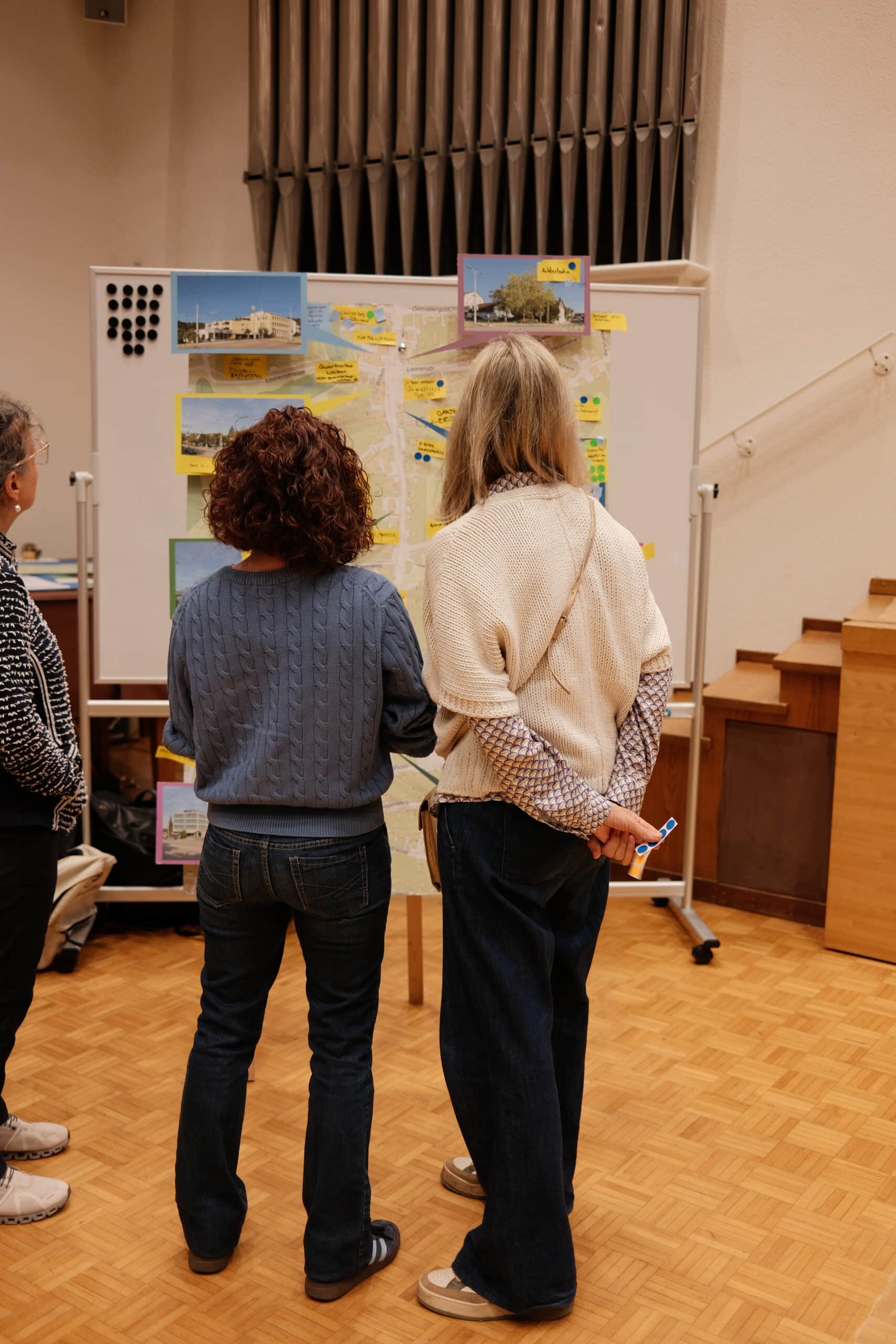
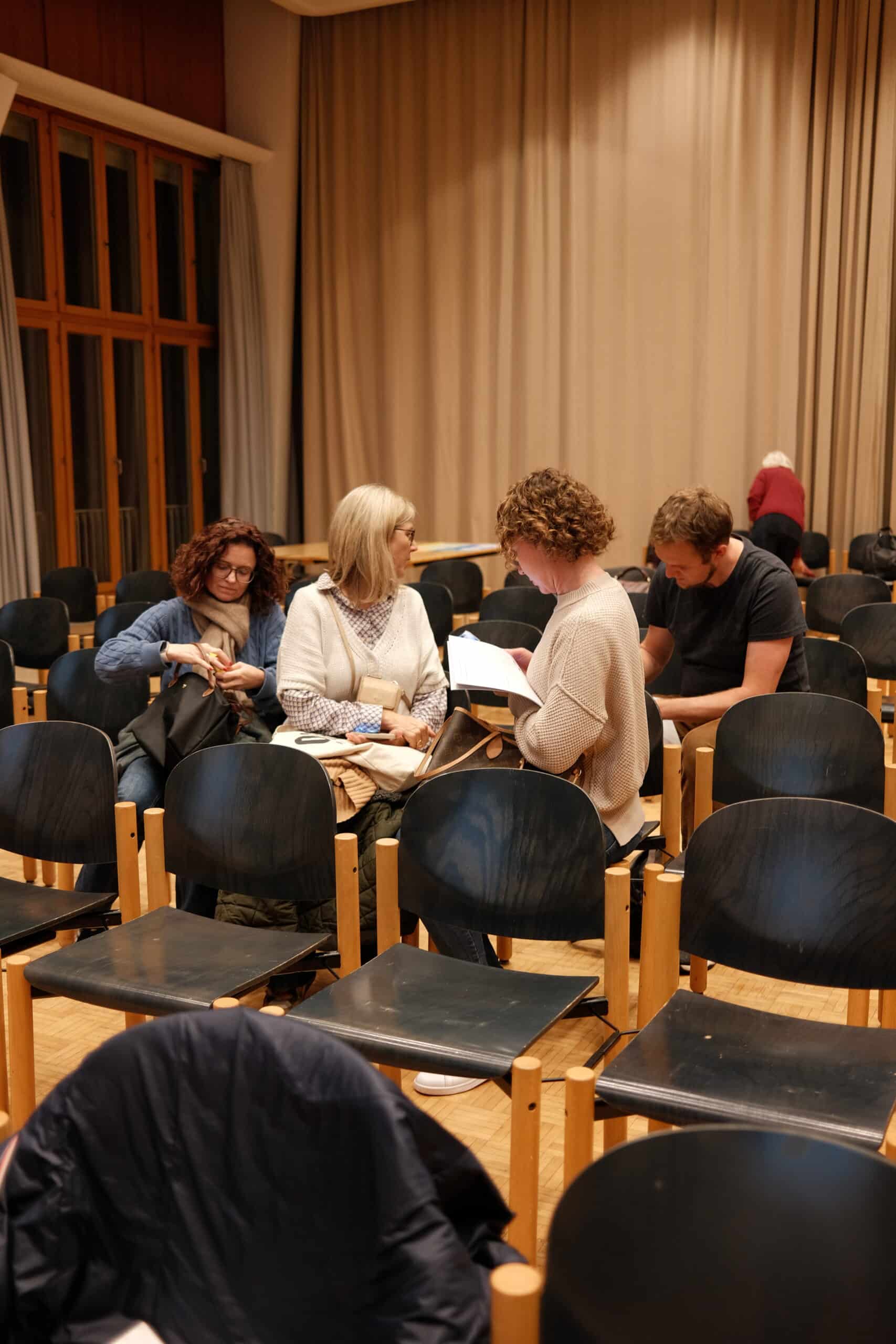
A recent event clearly demonstrates how well this works: In Witikon, approximately 60 people between 30 and 70 years old gathered to shape the future of their neighborhood. Within one evening, ten concrete projects found a team willing to implement them – from a neighborhood festival to a mobile café. The methodical structure of the workshop was crucial in this process.
1. Engage – Bringing People into Conversation
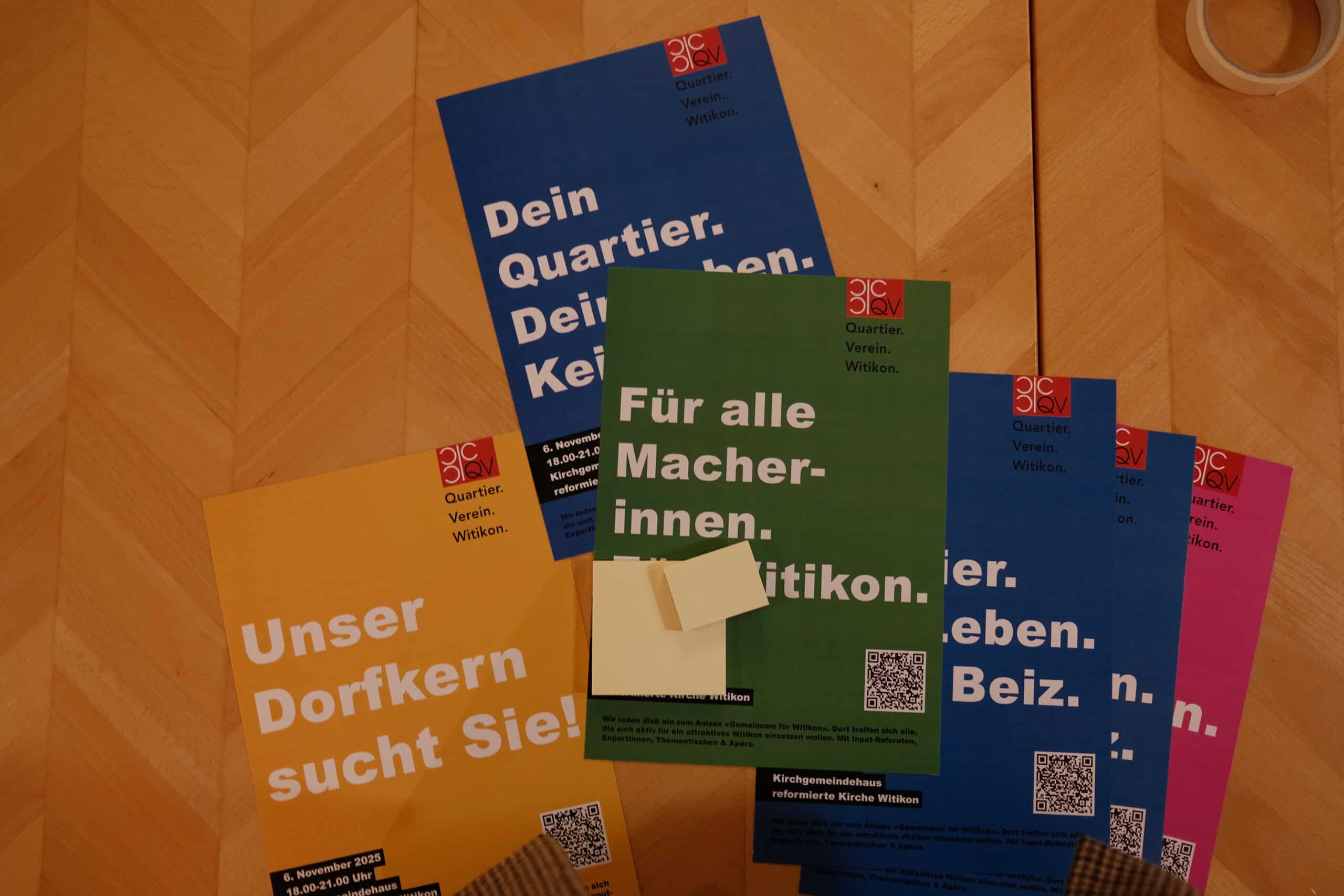
A participation process begins when curiosity is sparked and barriers are removed. In Witikon, visibly designed communication with clear messages generated attention in the neighborhood – and brought together a broad, intergenerational and gender-inclusive group of participants.
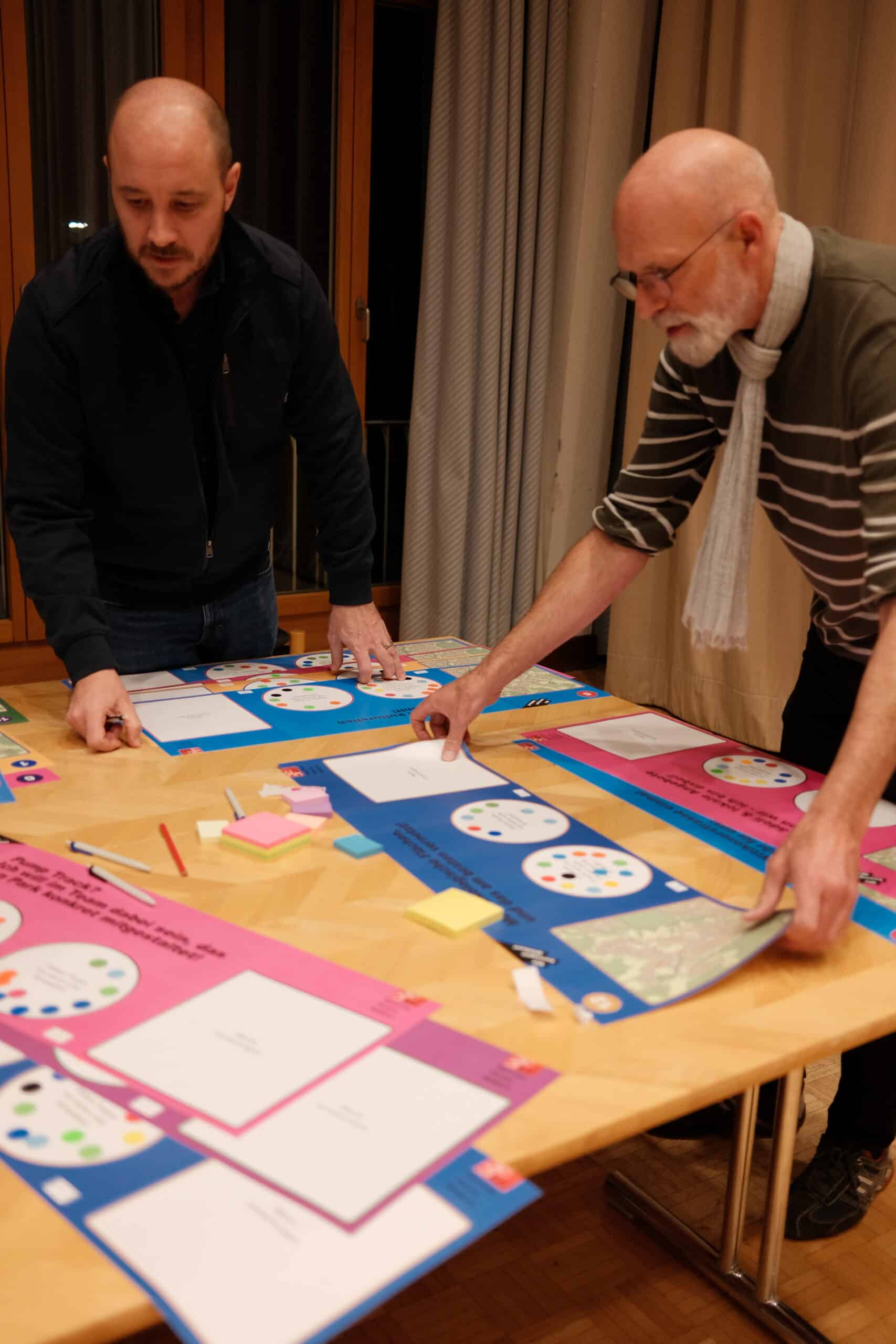
2. Structure – Developing Ideas Further with the Canvas Method
The core of our project workshop is the Canvas method. It helps teams organize ideas, clarify goals, and plan concrete next steps. Thus, from over 50 suggestions and ideas, ten implementation-ready projects emerged that evening, which will be further developed shortly after the workshop.
3. Facilitate – Purposefully Shaping Dialogue
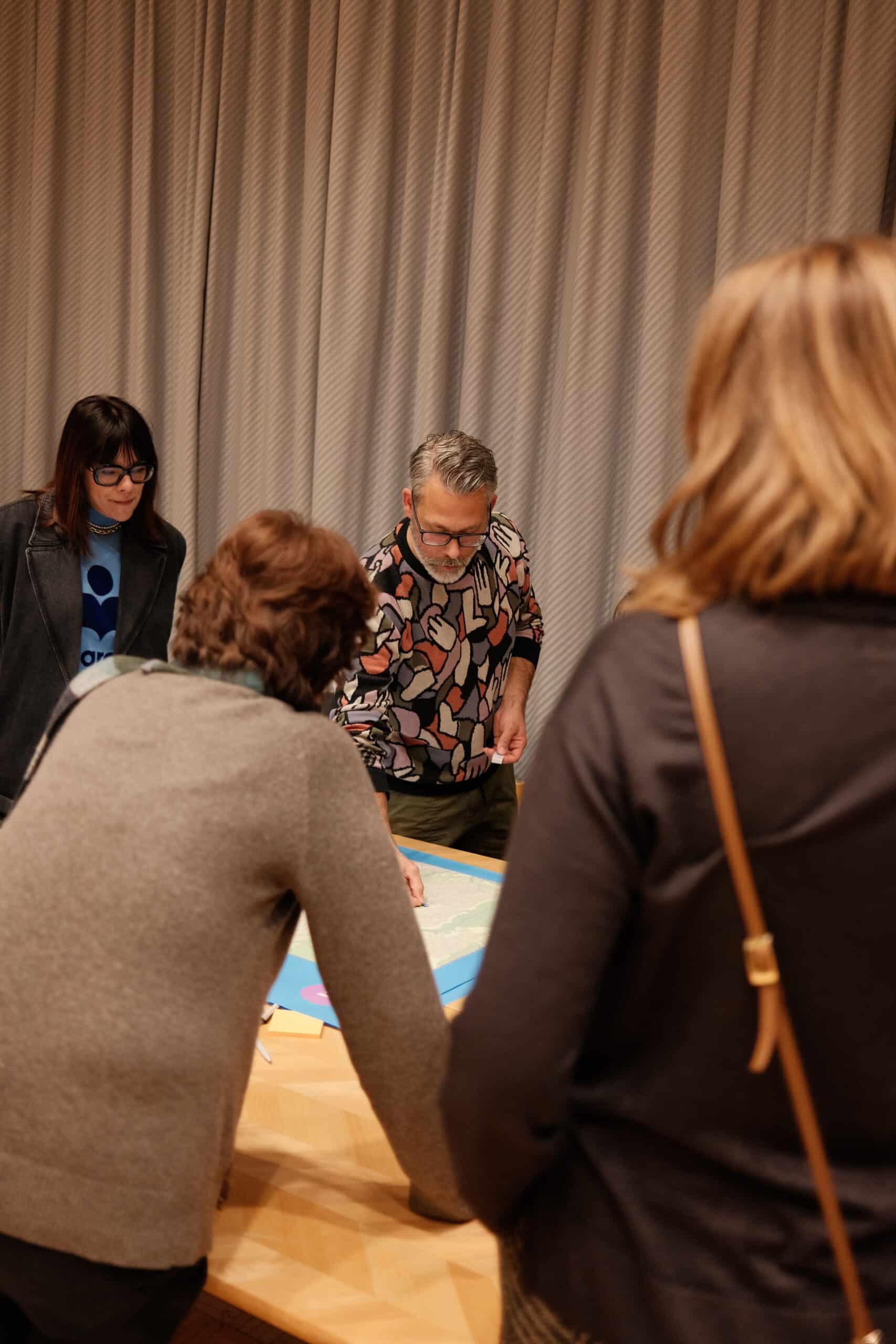
Participation thrives on how participants communicate with each other. In the project workshop, it became clear how important clear moderation and visual tools are to foster dialogue. Open discussion formats, mutual listening, and shared reflection made communication a driving force for effective solutions.
4. Sustain – Translating Commitment into Implementation
For ideas to continue to grow, structures are needed to support engagement. In Witikon, a neighborhood regulars’ table and a digital platform fulfill this role – a model that can also be applied in other communities to make participation effective in the long term.
Conclusion
The project workshop demonstrates how participation unfolds its impact: When people collaborate in a structured manner, communicate clearly, and take responsibility, sustainable momentum is created – in thinking, in collaboration, and in the neighborhood.